According to the most recent data from KFF and CMS, over 77 million Americans, which is about 1 in 5 people, are enrolled in Medicaid or CHIP (Children’s Health Insurance Program). That’s a massive safety net, but enrollment has stabilized after dropping from pandemic highs due to the end of continuous coverage rules.
But getting Medicaid is not quite an easy task; in fact, it takes weeks to months for the income verification, document reviews,
state eligibility checks, and sometimes repeated requests for information processing. Whilst the difficulties, we are here to make this path easy for you with our unique insights and research on what’s currently working in 2026, including perks and rules that most people never hear about from official sources.
What Is Medicaid?
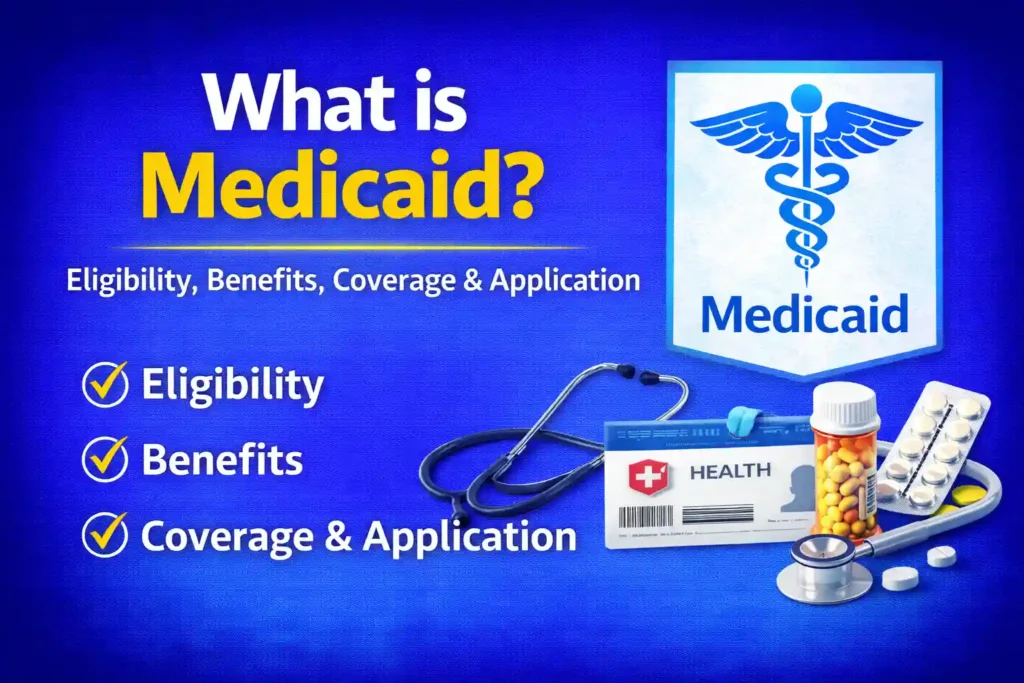
Medicaid is a mutual state and federal insurance program that provides free or partial health coverage to people with low income and limited resources. This specific aid is meant to provide health facilities and services to pregnant women, low-salaried adults, elderly adults, and disabled people.
Fundamentally, the federal government helps pay for it and sets general guidelines, but each state runs its own program. That’s why you see that Medicaid has different names in different states, and why the rules, income limits, and benefits can change based on where you live.
Medicaid is usually managed by private insurance companies. Even though it’s a government program, your day-to-day coverage is often handled by a health plan like UnitedHealthcare, Molina, or Humana. That’s why your Medicaid card may show a company name instead of just “Medicaid.”
Medicaid vs Medicare
Feature
Medicaid
Medicare
Who it’s mainly for
Low-income people of any age
People 65+, or younger with certain disabilities or conditions
Based on
Income and resources
Age or disability
Cost to you
Usually free or very low-cost
Premiums, deductibles, and copays for most parts
What it covers best
Long-term care, personal home help, full dental/vision for kids, strong mental health
Hospital stays, doctor visits, prescriptions, but no long-term care
Dual eligibility
Many people have both; Medicaid fills Medicare gaps
Medicaid often pays Medicare premiums and extras
Who runs it
Federal + state government, often through private plans
Federal government only
How Medicaid Works in 2026
By 2026, most people on Medicaid are no longer dealing directly with the state for their care. In many states, over 90% of enrollees are placed into private managed care plans. These are insurance companies like UnitedHealthcare Community Plan, Molina, Humana, or Centene that contract with the state to run Medicaid day to day.
If you’ve ever looked at your Medicaid card and wondered why it shows a private company’s name, this is why. That plan handles your doctor network, prescriptions, approvals, and customer service. And depending on which plan you’re assigned to, your experience can be very different even within the same state.
These private medicaid coverage plans do offer additional benefits on top of standard Medicaid perks. As posted by people who work with these plans, some members can get help with things like emergency rent or utility assistance, free gym or YMCA access, transportation, or even small rewards for completing health check-ins.
Who Qualifies for Medicaid?
Qualifying for Medicaid depends on your income, family size, state, disability, and pregnancy.
Kids and teenage adults
Pregnant women
Low-income parents or caretakers
Seniors aged 65 and older
People with different disabilities
In the 41 states and D.C. that expanded Medicaid under the Affordable Care Act, adults of age 19-64 without dependents are eligible too. The income limit is set to 138% of the federal poverty level (FPL). For 2026 in the continental U.S., that’s about $22,025 for one person or $45,000 for a family of four (higher in Alaska and Hawaii).
On the other side, non-expansion states like Medicaid Florida, Medicaid Texas, Alabama, Georgia, Kansas, Mississippi, South Carolina, Tennessee, Wisconsin, and Wyoming, have rules that are way stricter than expected. Adults without kids or disabilities usually don’t qualify unless their income is extremely low.
Some states also look at assets (like savings or property), but many skip that for expansion groups. People get denied sometimes, even with low income, because of missing paperwork or not reporting changes.
Does Medicaid Require Job Documents or Employment Proof?
No, job documents are not needed for Medicaid unless you’re applying as a low-income adult or with a family. Basically, Medicaid recipients are unemployed, students, stay-at-home parents, or retired.
Having said that, you do have to prove your income when you apply. If you have a job, that might mean recent pay stubs, a letter from your employer, or tax returns. If you’re self-employed, bank statements or profit/loss records work. But if you don’t have a job, you usually just explain your situation, like a signed statement saying how you get by (food stamps, family help, etc.).
But now a major shift is going on with work requirements in 2026. Under the new federal rules from the One Big Beautiful Bill, some able-bodied adults in expansion states will need to show 80 hours a month of work, job training, school, or community service starting later this year in certain places.
Do Illegal Immigrants Get Medicaid?
Undocumented immigrants can’t get regular Medicaid coverage that pays for doctor visits, prescriptions, or ongoing care. What they can access is Emergency Medicaid, which covers urgent situations like ER visits, labor and delivery for pregnancy, or life-threatening conditions.
There are some exceptions for kids or pregnant women in certain states that use their own money to cover more, like California or New York with programs for children regardless of status.
As for worries about data sharing, Medicaid agencies don’t report immigration status to ICE or enforcement for applying or getting care. The focus is on health, not immigration checks.
If your situation is something like your kids are U.S. citizens while you’re an undocumented parent, the kids can absolutely qualify on their own.
Does Medicaid Cover Abortion?
Yes, but especially under special circumstances like in cases of rape, incest, or when the pregnancy puts the person’s life at risk. Those limits apply to federally funded Medicaid.
Some states use their own money to cover abortion beyond those situations. In those states, Medicaid coverage is broader. In others, coverage is very limited.
Emergency pregnancy care is usually covered, but that does not always mean abortion services are covered unless state rules allow it.
Does Medicaid Provide Coverage for Mental Health Care and Psychotherapy?
Definitely, in fact medicaid plans include counseling, talk therapy, psychiatrist visits, and treatment for conditions like anxiety, depression, PTSD, and addiction.
Mental health services may also be handled separately from regular medical care, so your therapist might not be in the same network as your primary doctor. Calling the number on your Medicaid card and asking about behavioral health services can help.
What Does Medicaid Cover?
Doctor visits, hospital care, emergency room visits, prescriptions, basic tests are the standard coverage areas in all states across the US.
Whereas, dental checkups & treatments, ENT checkups, and transportation to the clinic is based on individual state guidelines.
Medicaid is not one list of benefits. It’s a set of minimum rules, and then states and insurance plans fill in the gaps however they choose.
Even people in the same state can have different coverage if they’re on different Medicaid plans.
If you want to know what’s actually covered for you, reading general Medicaid info won’t get you there. You have to check your plan or call the number on your Medicaid card and ask directly.
Extra Medicaid Benefits Most People Never Hear About
This is where Medicaid surprises people.
Beyond medical care, many Medicaid plans offer extra help that has nothing to do with doctors or hospitals. The problem is, they don’t advertise it, and most people never think to ask.
Depending on your state and your Medicaid health plan, there may be help for things like rent or utility bills during emergencies. Some plans can step in if you’re facing eviction or if your electricity or water has been shut off. Others offer gym or YMCA memberships, swimming lessons for kids, or small rewards for completing health checkups or assessments.
Some plans help with transportation beyond medical visits. Others offer tutoring for children, summer camp assistance, or job training support. There are even cases where plans help pay for home fixes tied to health or safety, like repairing a broken AC or heater.
Not everyone qualifies for all of this. Approval depends on the plan, how long you’ve been enrolled, and what kind of situation you’re dealing with. But these benefits do exist.
Can Refugees and Asylees Get Medicaid?
Yes, right now in the start of 2026, refugees and asylees can qualify for Medicaid if they fulfill the income rules. Unlike many other lawful immigrants who face a 5-year waiting period, refugees, asylees, and a few similar humanitarian groups like victims of trafficking or certain Afghan/Iraqi entrants, get full access right away in most cases.
You must be able to show proof of your status, like an I-94 arrival record, asylum approval letter, or refugee travel document, along with the usual income and residency papers to grant Medicaid.
Some states even cover certain immigrants with state funds if federal rules limit them.
New federal rules from the 2025 reconciliation law often called H.R.1 or the One Big Beautiful Bill kick in on October 1, 2026. After that, refugees, asylees, parolees, and many other humanitarian statuses will no longer qualify for federally funded full Medicaid or CHIP in most cases.
Only U.S. citizens, lawful permanent residents (green card holders), and a few specific groups will remain eligible.
Final Thoughts
Having health facilities available for all is the government’s responsibility, and taking care of these benefits is a duty of a citizen, too. Because even though Medicaid has been in the service for quite some years now, but still people find it difficult to apply for it. That’s the reason we’ve compiled this information for your ease, and we’ll continue providing more. Just know that Medicaid is accessible if you’re eligible for it; you just need to follow the right steps.
FAQs
Can I have Medicaid and private insurance at the same time?
Yes. Medicaid can work as secondary insurance and help cover costs your other insurance doesn’t.
Can Medicaid see my bank account?
Usually no for expansion adults. Asset checks mostly apply to seniors and long-term care. Income matters more than savings for most people.
Can Medicaid pay old medical bills?
Sometimes. Medicaid can be retroactive for up to three months if you qualified during that time. You usually have to ask for this.
Will I lose Medicaid if I get a job?
Not automatically. If your income stays under the limit, you can keep coverage. You do need to report changes.
Does Medicaid affect immigration status or public charge?
For most people, no. Medicaid use does not count against refugees, asylees, children, pregnant women, or emergency care.
Why did I get denied even though my income is low?
Most denials happen because of missing paperwork, deadlines, or unreported changes, not because someone truly doesn’t qualify.